A2 Desi Cow Ghee
A2 Desi Cow Ghee
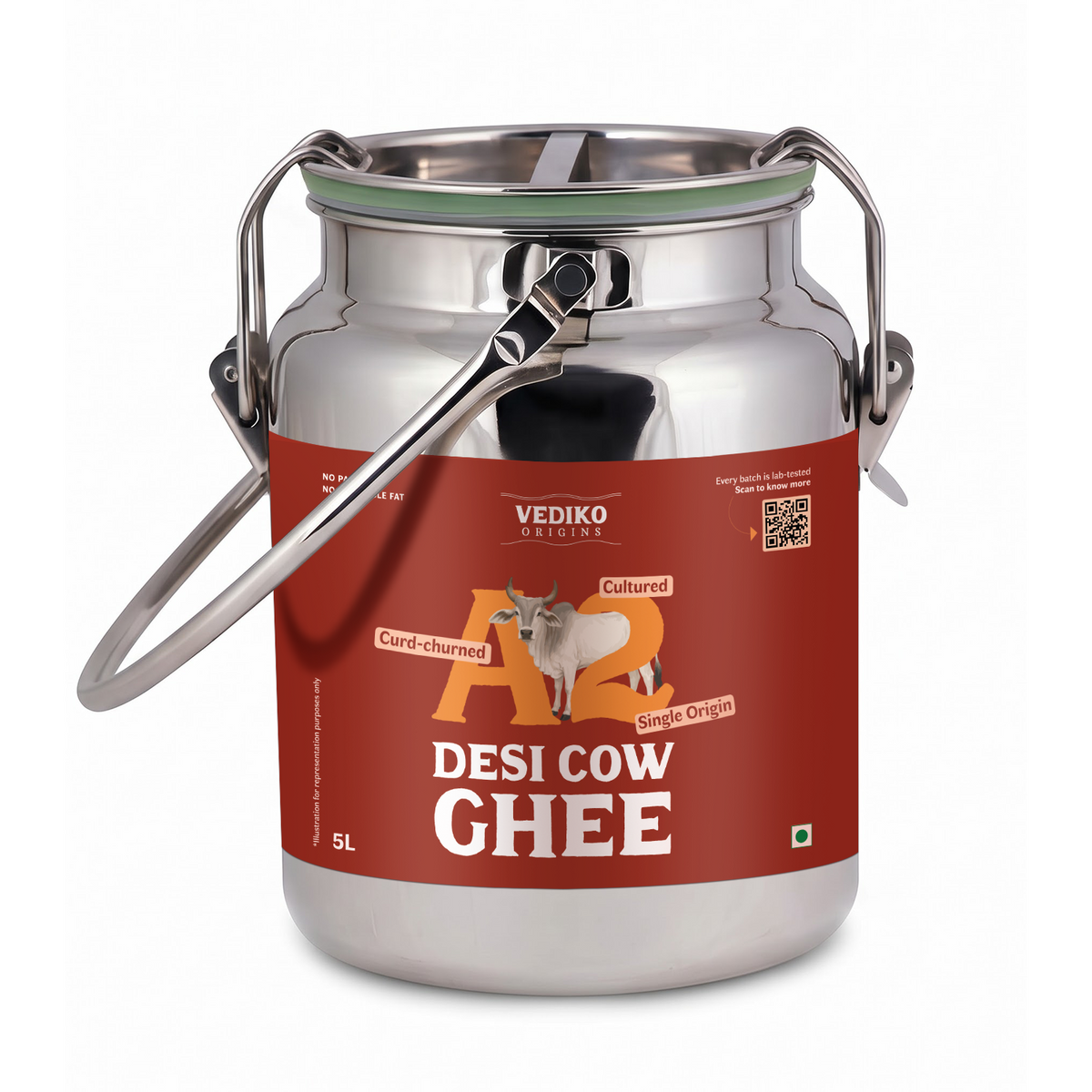
Cultured | Curd-churned | Lab-tested, every batch
Couldn't load pickup availability
I · LAND
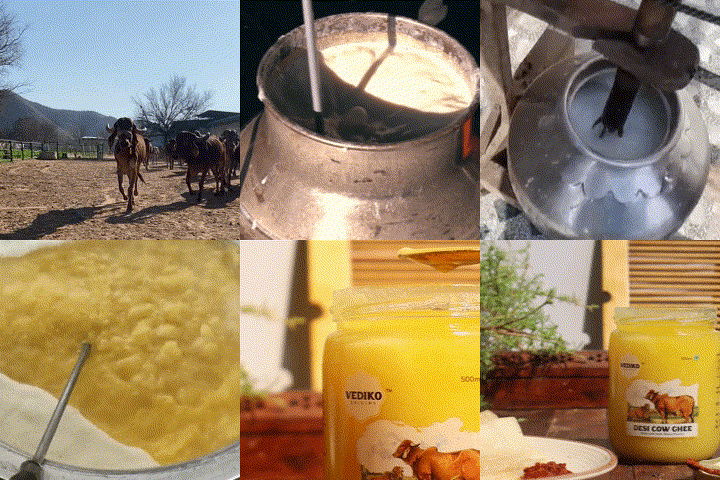
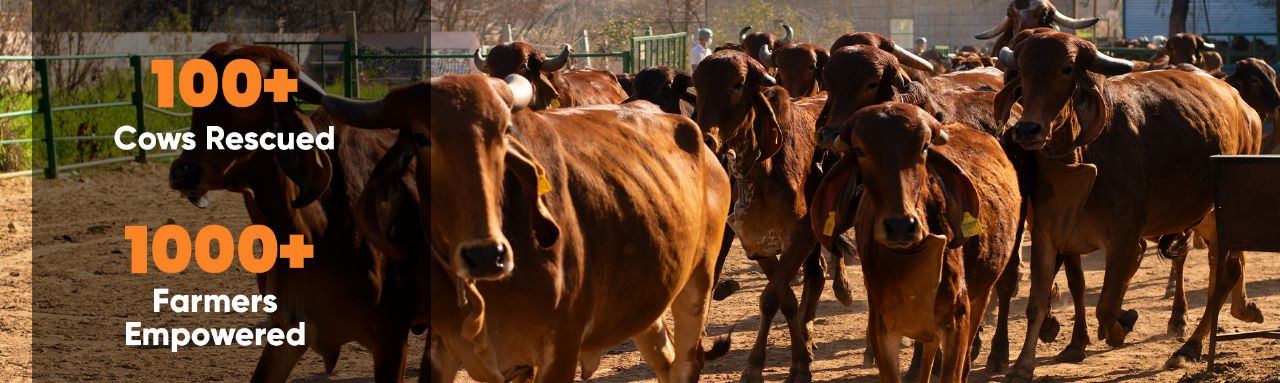
Cream from the A2 milk of indigenous desi cows Tharparkar, Sahiwal, Rathi, Kankrej and Haryanvi grazing free across Haryana and Rajasthan.
We name the breeds and the region because "desi cow" on its own tells you nothing.
II · HAND
Cream cultured overnight into thick curd. Curd churned to makhan. Makhan slow-cooked, never hurried, until the aroma turns nutty and fulfilling.
One ingredient goes into the jar: Desi Cow Milk. No palm oil, no vegetable fat, no colour, flavour or preservative. Nothing added but the culture.
We begin at cream, not whole milk. Most brands would leave that out. We would rather tell you.
III · PROOF
Every batch is tested at an independent NABL-accredited laboratory for beta-sitosterol and its fatty-acid profile — the analysis that detects vegetable oil and any non-milk fat. A batch that does not pass is never sold under our name.
Scan the QR code on your jar to read the report for the batch in your hands. We publish every one, including the ordinary ones.
At the table
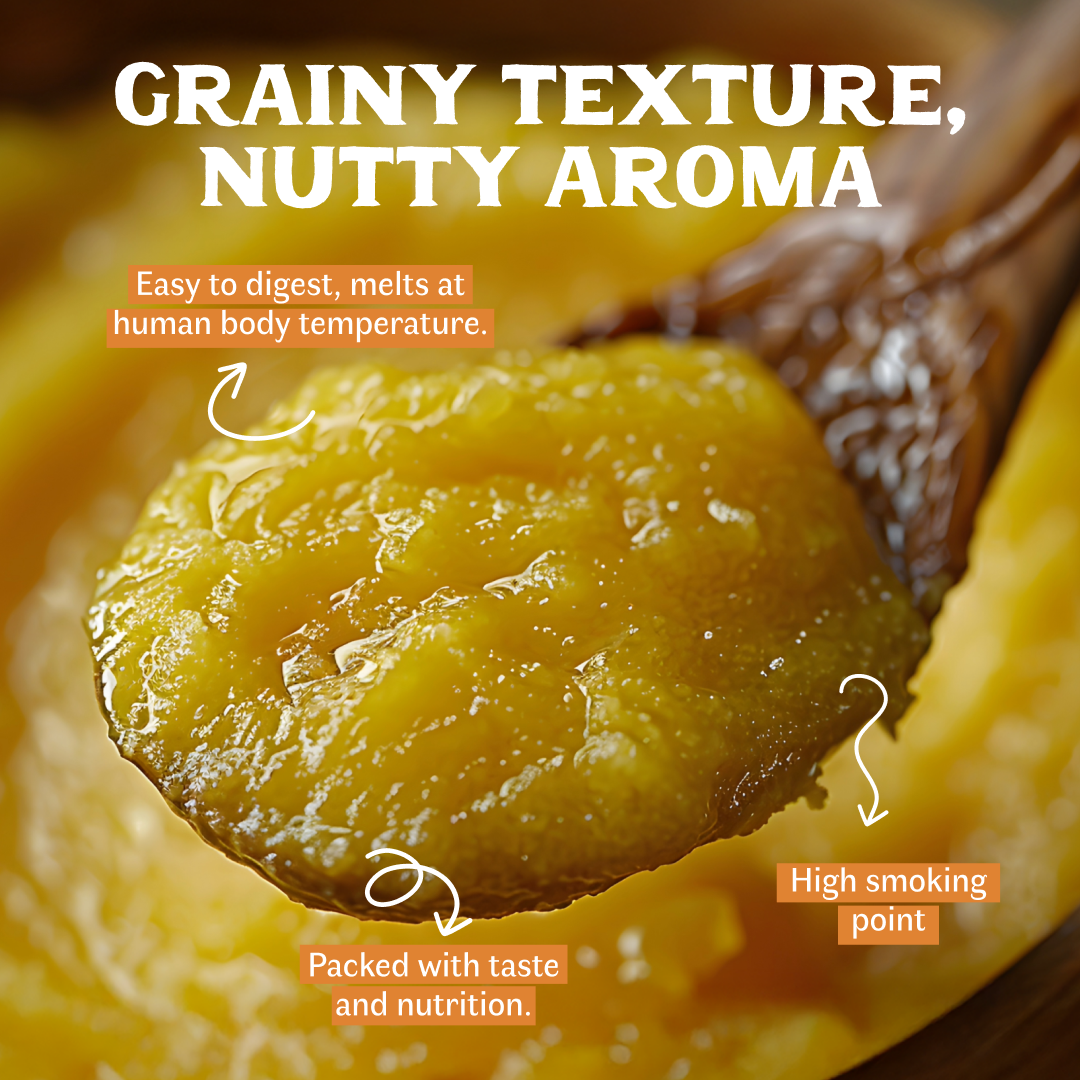
Nutty and grainy when cool, clear gold when warm. A high smoke point keeps it steady for tadka and everyday frying, though it is loveliest simply melted, over hot dal, stirred through halwa, or on a roti straight off the tawa.
Colour, grain and aroma shift a little through the year as the grazing changes with the season. That is a property of real ghee, not a fault.
Land, hand, proof. A product that cannot answer all three never becomes a Vediko product.
Description
Description
Benefits:
-Prevents heart blockages
-Lowers bad cholesterol
-Helps in curing gastric problems
-Promotes effective digestion
-Helps with insomnia, in weight loss, curing joint pains & good for body massages
-Also good for cooking as it has high smoking point.
Ingredients
Ingredients
Desi Cow Milk
Storage Information
Storage Information
Store at Room Temperature
FAQ
FAQ
1. How is this different from your A2 Gir Cow Ghee?
Two things: the milk and the method. Our Gir ghee is made from the whole milk of a single breed — Gir cows — by the full bilona process. This one is made from the cream of A2 milk drawn from several indigenous breeds. Both are cultured and curd-churned, both are lab-tested every batch. The Gir is our reserve ghee; this is the one for everyday cooking.
2. Why is it cheaper?
Because we start with cream rather than whole milk, which means less milk is needed per litre. That is the honest reason, and it is the only reason. Nothing is left out of the jar to bring the price down — the ingredient, the culturing, the churning and the testing are the same.
3. Is this bilona ghee?
It is cultured and curd-churned, which is the heart of the bilona method. But we reserve the word "bilona" for our Gir ghee, which is made from whole milk the traditional way. We would rather be precise than borrow a word.
4. What does "A2" mean here?
A2 refers to the type of beta-casein protein in milk from indigenous Indian cow breeds, as opposed to the A1 variant more common in crossbred and exotic cattle. Our cream comes only from A2 desi breeds.
5. What exactly is tested, and by whom?
Every batch goes to an independent NABL-accredited laboratory — not our own lab. It is tested for beta-sitosterol, a plant sterol whose presence would indicate vegetable fat, and for its fatty-acid profile, which must fall within the range expected of cow milk fat. Scan the QR code on your jar to read your batch's report.
6. Why is my ghee grainy?
Because it was churned from curd. The grainy, danedar texture forms naturally in cultured ghee as it cools and is one of the more reliable signs it was not made by a shortcut. Warm it and it turns clear gold again.
7. The colour looks different from my last jar.
It will. The cows' grazing changes through the year, so winter ghee tends to run deeper gold and grainier, summer ghee paler and softer. We do not correct for this. It is a property of real ghee.
8. Does it need refrigeration?
No. Store it in a cool, dry place away from direct sunlight, keep the lid closed, and always use a clean, dry spoon — moisture is the only real enemy. Refrigerating it simply makes it hard to scoop.
9. How long does it keep?
Twelve months from the date of manufacture, printed on the jar. Used with a dry spoon, ghee is naturally very stable.
10. Can I cook with it at high heat?
Yes. Ghee has a high smoke point, around 250°C, so it holds up to tadka, sautéing and frying without breaking down.
11. Is this suitable for vegetarians?
Yes. It is a dairy product and carries the green vegetarian mark. It is not vegan.


Our honest Process
Cream cultured to curd, curd churned to makhan, makhan slow-cooked to ghee.